Ask your child what they did in school today, and the answer may surprise you. Maybe they built a small model, spoke in front of the class, or worked out a problem with a friend instead of copying it from the board.
The world your child is growing up in is not the one you studied in. Technology, careers and even the way people communicate have changed a great deal. Marks still matter, of course. But as parents, you also want a child who is confident, thinks independently and does not freeze when a problem looks unfamiliar.
That is what modern education is about. At Sanskruti World School, we believe learning should prepare children for life, not only for the next exam.
What Does Modern Education Really Mean for Today’s Children?
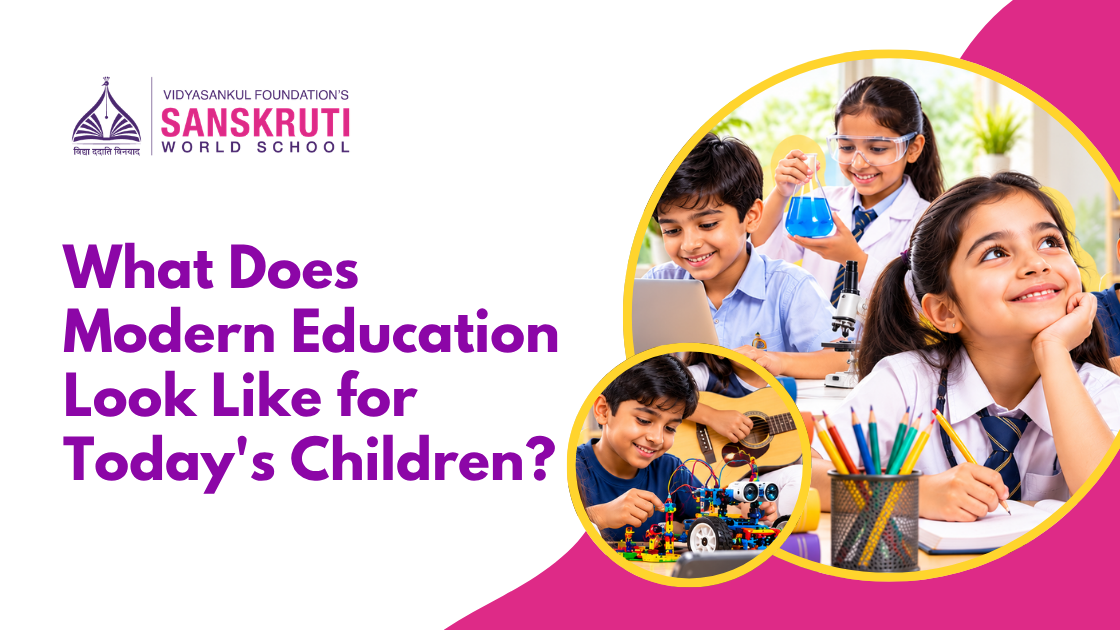
Modern education combines academic learning with practical knowledge, creativity, communication and personal development. Children still study maths, science and languages. They still take exams. What changes is the way they learn and the purpose behind it.
So how is it different from traditional education? Here’s a simple example. In a rote-learning classroom, a child memorises how photosynthesis works and writes it perfectly in a test. In a modern classroom, that child may also plant a seed, watch it grow and explain what happens when it gets less sunlight. The textbook is still there. It just stops being the only teacher.
India’s National Education Policy also points in this direction, with more focus on understanding and application than on memorization. A balanced modern education system does not throw away discipline or exams. It gives them more meaning.
How Is Modern Education Changing the Way Children Learn?
Learning Beyond Textbooks
Think about fractions. A child who has only seen them on a page may struggle. The same child who has divided a roti or measured ingredients for a recipe often understands them faster. Experiments, projects and real-life examples make lessons stick because children can see why a topic matters. This kind of skill-based learning helps them use what they know, not just repeat it.
Encouraging Curiosity and Critical Thinking
You might have noticed that small children ask “why” constantly. Somewhere along the way, many learn that questions are inconvenient. Good classrooms work the other way. A teacher who asks “What do you think will happen?” before explaining gives children a reason to think. Even a wrong guess becomes useful, because the class can discuss why it did not work.
Technology as a Learning Tool
Technology helps when it is used with a purpose. A short video can explain a science concept better than a page of text, and a simple app can help a child practise a language. But screens do not replace teachers. A child who is stuck needs a person who notices the confusion on their face. Thoughtful modern teaching methods use technology to support the teacher, not to stand in for one.
Building Confidence and Communication Skills
Some children know the answer but hesitate to speak. Group discussions, class presentations and show-and-tell sessions give them regular, low-pressure practice. A child who explains a project to classmates every month slowly becomes comfortable sharing ideas. That confidence helps later in interviews and teamwork, and in simpler moments too, like telling a teacher “I did not understand this.”
Learning Through Sports, Arts and Extracurricular Activities
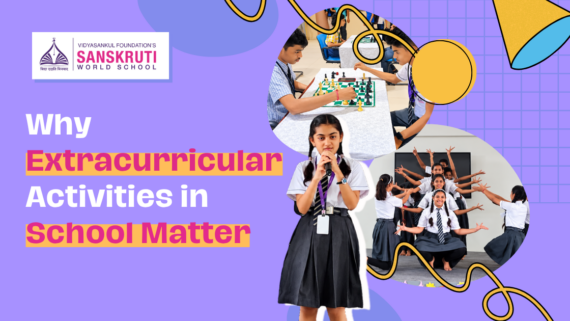
A football match teaches teamwork and how to handle a loss. A stage performance teaches discipline and nerve. Art lets children express what they cannot always say in words. These activities are not a break from learning. They support play-based learning, helping them grow socially, emotionally and physically alongside academically.
Why Are Future-Ready Skills Just as Important as Academic Success?
You know, nobody can say exactly what careers will look like 10 or 15 years from now. Some jobs may change and new ones may appear. What children can carry with them, whatever happens, is the ability to learn, adapt and solve problems.
So what skills do children need for future careers? The ones that stay useful in almost any field: communication, collaboration, creativity, critical thinking, adaptability, digital literacy and emotional intelligence. Together, these are often called 21st-century skills for students. They do not replace strong academics. They help children make better use of them in college, at work and in daily life.
This is the real importance of modern education. It does not promise a particular career or result. It gives children better tools to explore their options. That is how future-ready education prepares students for what comes next: not by predicting the future, but by building minds that can handle change calmly.
The Sanskruti World School Approach to Modern Education
At Sanskruti World School in Boisar, we believe modern education is about finding the right balance. Academics remain important, but so does the child behind the report card. Our approach focuses on supporting every child’s intellectual, physical, social, emotional and creative growth throughout the academic session, not just in the weeks before exams.
We believe every child deserves opportunities to explore their interests and discover their strengths. A shy child gets chances to speak up. A curious child is encouraged to ask questions. A child who loves sports or art gets opportunities to develop that passion. Through engaging classroom activities, participation in school events and practical learning experiences, we strive to help our students build confidence, discover their potential and develop valuable skills that prepare them for the future.
No school can promise exact outcomes for every child, and a sensible parent should be wary of any that does. What you can look for is an environment where children are guided, encouraged and given room to grow at their own pace. Parents are always welcome to visit the campus, meet the teachers and see how learning happens in the classroom.
Preparing Your Child for Tomorrow Starts Today
A good education is not only about scoring well. It is about helping your child discover what they are good at, feel confident enough to try new things, and build skills that stay useful long after school ends. Modern education makes room for all of this without giving up on strong academics.
Sanskruti World School, Boisar is committed to supporting children’s academic progress, all-round development and future-ready learning throughout the academic session. If you are choosing a CBSE school for your child, we welcome you to have a closer look!
Give Your Child the Education They Need for a Brighter Tomorrow