My neighbour’s son can sit with a maths worksheet for an hour and not get bored once. Her daughter, on the other hand, can’t sit still during homework time but the moment music comes on, she’s a different child altogether, singing, dancing, completely in her element. Most parents will recognise this.
One child does well in exams. Another finds their spark on a stage, on a football field, with a paintbrush, or simply telling a story to anyone who’ll listen. Marks matter, of course they do. But they rarely tell the full story of who a child is.
This is where extracurricular activities in school come in. Not as an extra chore to squeeze into an already packed day, but as a genuine opportunity for children to figure out what they enjoy and what they’re good at. Let’s understand why these extracurricular activities are important in the first place.
What Are Extracurricular Activities in School?
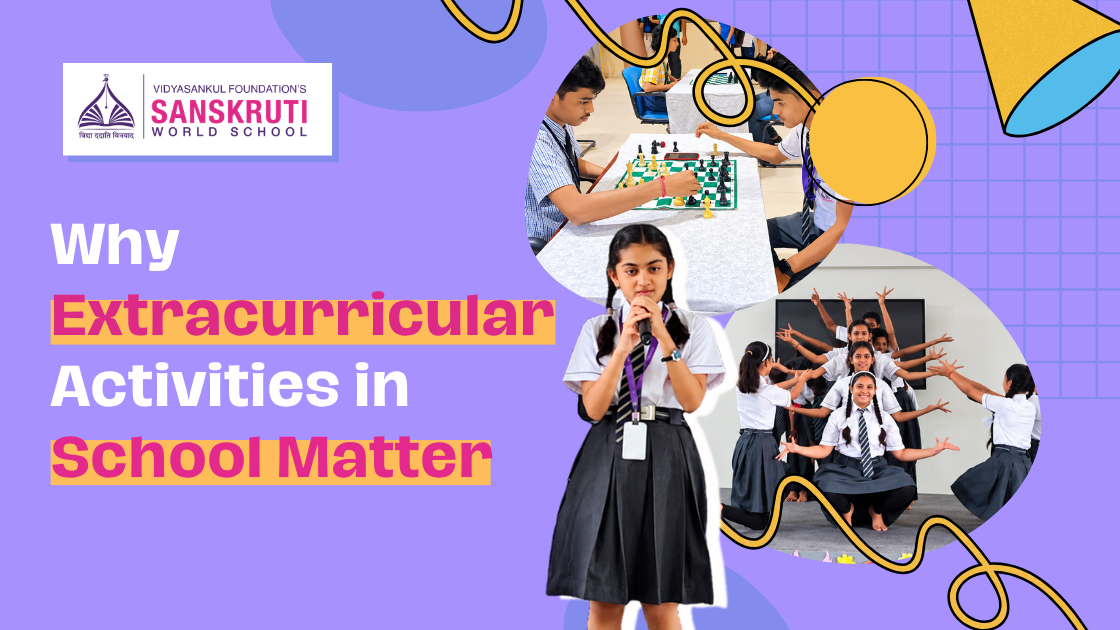
Extracurricular activities in school are simply the things children do outside their regular subjects: sports, music, dance, art and craft, drama, debates, quizzes, storytelling, cultural programmes, and the usual school competitions most of us grew up with too.
These are the moments where a child gets to try something new, mess it up a little, laugh about it, and have another go without worrying about marks on a report card.
None of this replaces classroom learning. It works beside it. Maths, science, and language build a child’s knowledge. Extracurricular activities for students build something equally useful: confidence, creativity, and the ability to get along with other people. A child needs both. One without the other leaves something missing.
Key Benefits of Extracurricular Activities for Children
It’s easier to talk about the benefits of extracurricular activities and skills through real school moments rather than big, vague ideas.
Discovering Talents Children Didn’t Know They Had
There’s almost always that one quiet child in class who barely speaks up, and then surprises everyone at the art exhibition or on sports day. Give children enough variety and sooner or later, something clicks. Sometimes a talent is simply waiting for the right chance to show up.
Confidence That Comes From Actually Doing It
Standing in front of an audience for the first time is nerve-wracking for most children, whether it’s a school play, a debate, or a dance recital. But that nervousness fades a little each time. Children who perform, present, or compete regularly tend to carry that ease with them well beyond the stage.
Learning to Work With Others
Team sports, group dances, and class projects teach children things no textbook really can: how to listen, how to disagree without a fight, how to wait for their turn, and how to help a teammate who’s struggling. These small, extracurricular activities for students add up over time.
Room to Be Creative and Think Differently
Art, music, drama, craft projects, and many extracurricular activities and skills rarely have one correct right approach, and that’s exactly the point. A child painting a scene or putting together lines for a skit is solving small problems the whole time, usually without realising it. This kind of creative learning doesn’t happen the same way during a maths test.
Patience, Practice, and Learning to Try Again
Ask any child who’s rehearsed for a cultural programme or trained for a sports meet: things rarely go right on the first attempt. There’s a missed step, a forgotten line, a race that doesn’t go as planned. What children pick up from this is harder to teach directly: patience, the habit of practising, and the willingness to try again after a setback.
A Bit of Balance in School Life
A child who has something to look forward to, whether it’s football practice on Tuesday or art class on Friday, often carries a lighter mood through the rest of the week. Physical activity, time with friends, and a break from constant academic pressure all play a part in keeping school life enjoyable rather than overwhelming. Overall, it is a great perk and benefit of extracurricular activities.
It’s worth saying clearly: these outcomes aren’t guaranteed in the same way for every child, and they shouldn’t be expected to be. Children grow at their own pace, and that’s completely fine.
Every Child Deserves a Chance to Participate
Extracurricular activities in school aren’t meant only for the interested kids or the ones who bring home trophies. A child who tries pottery for the first time, enjoys it, and never competes in anything still gains something real from that experience.
Not every child warms up to new activities at the same speed. One might jump at the chance to join the debate club. Another might need a full year of quiet encouragement before even trying. This is normal, and it’s exactly why schools and parents need to focus on participation and enjoyment rather than comparing one child’s progress to another’s.
How Parents Can Encourage Their Children’s Interests
Parents often ask what they can actually do to help. Honestly, it doesn’t need to be complicated. A few things tend to make a real difference:
- Pay attention to what your child gravitates towards during free time, not what looks impressive to relatives or other parents.
- Let them try a few different things before deciding what sticks. One term of football and one term of art won’t hurt anyone.
- Notice and appreciate their effort, not just the medals or certificates that come home at the end of the year.
- Try not to compare their progress with a sibling’s or a classmate’s, even when it’s tempting to.
- Give them room to actually enjoy it, even on the days when progress feels slow or a performance doesn’t go as planned.
These are small habits, but parents who follow them tend to see their children open up a lot more comfortably to new experiences.
Give Your Child a Chance to Truly Shine
At Sanskruti World School, Boisar, we’ve always believed that every child carries strengths of their own, some that show up in the classroom and some that only appear once given the chance. Alongside regular academics, students here are encouraged to take part in the various extracurricular activities organized through the year, giving them the space to build confidence, creativity, teamwork, and a genuine sense of holistic development.
We think of education as something that goes beyond textbooks and exam halls. Our aim is to create a school environment where children feel comfortable exploring what interests them, without feeling like they’re being measured against someone else.
If you’re looking for a CBSE school in Palghar and Boisar that takes your child’s personal growth as seriously as their academic progress, we’d genuinely love for you to come visit Sanskruti World School and see this in practice. Every child deserves the chance to shine in their own way. Get in touch with us today to learn more about admissions, and give your child the opportunity to learn, explore, and grow.