Have you ever noticed your child seems anxious before school, withdrawn after classes, or struggles to share how they really feel about their day? As parents, we all want to ensure our children are not just succeeding academically but, more importantly, feeling supported emotionally as they grow. Maybe you’ve wondered why your child’s mood shifts or why they find it challenging to cope with today’s fast-paced environment. The world feels busier than ever, and our children pick up on this stress, sometimes, even before they can describe it.
At Sanskruti World School, the best secondary school in Palghar, we understand your concerns. More parents are searching for ways to nurture their children’s mental well-being, and one practice gaining momentum in schools worldwide is mindfulness and meditation. But what does it really mean for your child’s day-to-day experience at their school? Let’s explore the powerful impact of these simple yet profound practices.
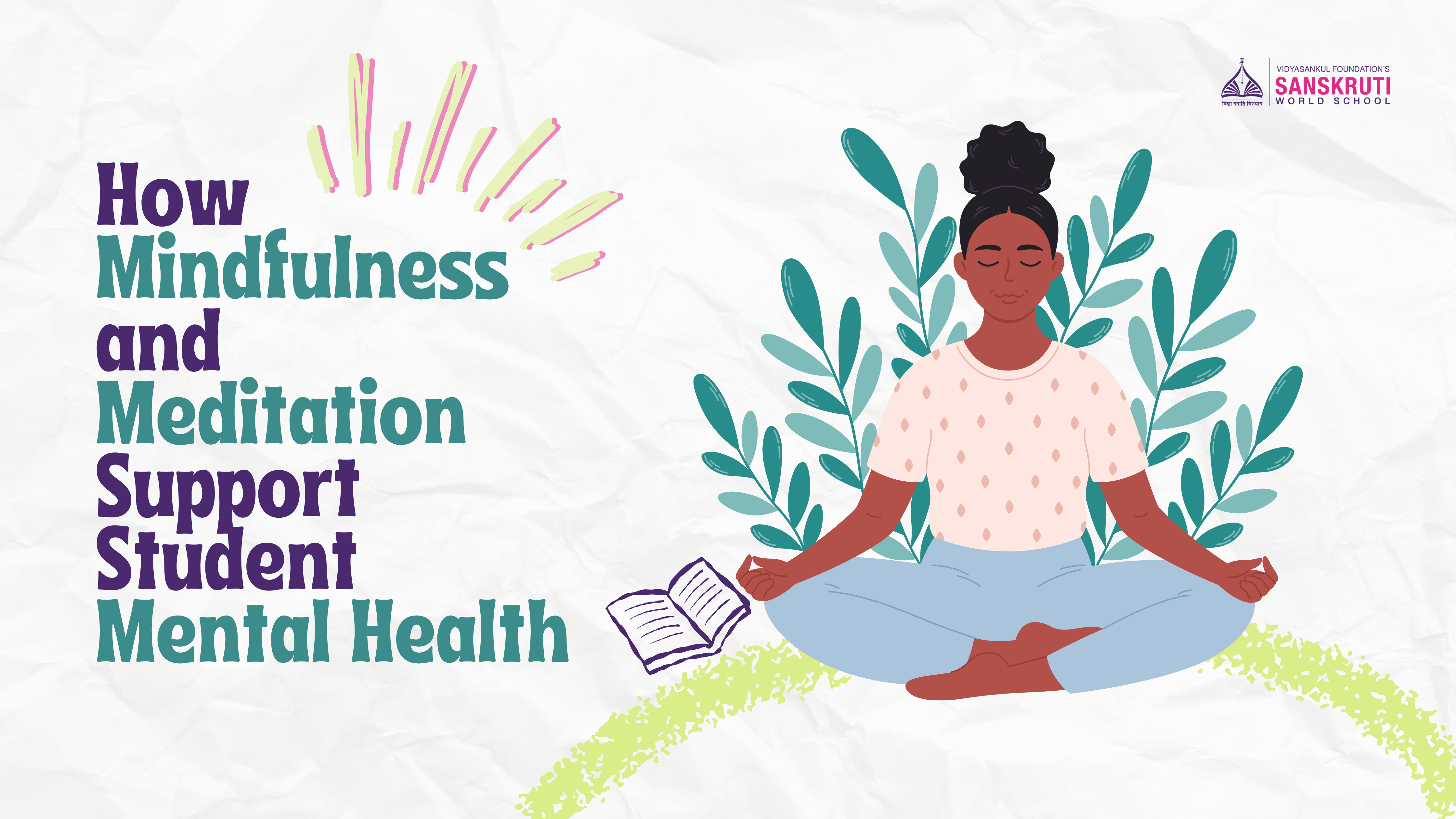
How Mindfulness and Meditation Support Mental Health
1. Helps Children Focus Better in the Classroom
Imagine your child settling calmly into their first lesson of the day, able to pay attention, follow instructions, and engage with learning. This isn’t just a dream for teachers and parents, it’s a skill that mindfulness can truly nurture. By guiding children to focus on their breath or gently return their attention when their mind wanders, mindfulness lays the foundation for strong concentration.
As the nursery school in Boisar, we say this is particularly valuable in the foundational years, where little minds are rapidly absorbing new concepts. Teachers who invite students to take a mindful moment before starting an activity often see improved participation and longer attention spans. The ability to “reset” after distractions can make a big difference in learning new skills, managing busy classrooms, and building a strong academic base.
2. Reduces Anxiety and Emotional Stress
Have you ever noticed your child complaining of a stomach ache on test days or feeling anxious about making new friends? Stress can affect children in countless ways, even at a young age. At our english primary school in Palghar, our teachers encourage using mindful breathing and guided relaxation exercises to help students manage anxiety and emotional ups and downs.
Mindfulness and meditation introduce children to practical tools: taking deep breaths, sitting quietly for a moment, or listening to calming music. These practices soothe the nervous system, allowing students to let go of worries and approach tasks with greater calm. Over time, children learn how to identify their feelings, talk about them, and manage them before they spiral out of control.
3. Builds Resilience for Everyday Challenges
We all hope our children always have the confidence to bounce back from setbacks, whether it’s a difficult exam, a disagreement with friends, or disappointment on the sports field. Mindfulness encourages children to observe thoughts and feelings without judgment, helping them realize that a tough moment doesn’t define their whole day.
For older students, this builds something psychologists call “resilience”, the ability to adapt to challenges, recover after a setback, and grow through life’s inevitable ups and downs. Mindfulness practices provide a safe mental space to reflect, learn from mistakes, and try again without fear of failure. This is how children, one mindful breath at a time, become emotionally stronger and more confident in facing the future. Our secondary school in Palghar actively encourages students to practice mindfullness to easily deal with daily life challenges.
4. Improves Social Skills and Emotional Intelligence
School is not just about academics—it’s also where children learn how to navigate relationships, share, cooperate, and resolve conflicts. Mindfulness practices, when integrated in nurturing environments like an International School in Palghar, help children tune in to their own feelings and the feelings of those around them.
Regular mindfulness exercises foster empathy, patience, and kindness. Students become better listeners, more considerate classmates, and more effective communicators. The classroom transforms into a place of understanding and respect, making it easier for every child to belong and thrive. By learning to pause before reacting, children become more thoughtful friends, ready to face both the joys and challenges of social life in school.
5. Creates a Calm, Positive Learning Environment
Imagine walking into a classroom that feels peaceful, where children greet their teacher with smiles, and challenges are handled with patience. This is the kind of atmosphere mindfulness and meditation can create across all age groups, from the youngest learners in nursery school in Boisar to the teens in higher education.
The benefits don’t stop at individual students, mindfulness positively shapes the entire learning environment, making it easier to manage classroom behavior and support better academic outcomes. When students and teachers start the day or transition between activities with a mindful pause, the whole class experiences more focus, less tension, and a sense of shared calm.
Creating Foundations for Happy, Resilient Learners
Mindfulness and meditation are not optional in today’s fast-paced world, they are becoming essential building blocks for our children’s holistic development. More than ever, parents want an educational journey for their children that prioritizes both academic excellence and emotional well-being.
If you’re searching for a school that genuinely values the mental health and personal growth of your child, consider Sanskruti World School—an acclaimed International School in Boisar. At our school, mindfulness and emotional wellness are woven into daily life, ensuring each child gains not only a strong academic foundation but also the resilience and confidence to succeed in every part of life. Choosing a nurturing, forward-thinking school is the first and most important step in supporting your child’s growth—academically, emotionally, and socially. Learn more about our curriculum and give your child the foundation to learn & prosper in an enriching environment.